Indie Maker Weekly (Issue 163): Solo biotech startup acquired by Anthropic: Pipeline-in-a-Person
Solo biotech startup acquired by Anthropic: Pipeline-in-a-Person
Curated indie hacking and product monetization stories, published weekly.
Contents
1、Calma Color: First paid user—$20 lifetime license2、Popcorn browser extension hits 100 weekly active users: 5 cold-start lessons3、The agent economy’s three infrastructure layers: sell agents, feed agents, host agents4、Two apps, $1,400 MRR in Month 1: An indie dev’s first revenue milestone5、Indie dev lands $5,000 in 1 day trial revenue, targets $3M ARR6、PostFast social scheduler sees trial surge—debunking ‘software is dead’7、Indie dev hits $100 MRR—and quits the 9-to-58、Solo biotech startup acquired by Anthropic: Pipeline-in-a-Person9、Claude-SEO: A full-featured SEO skill library built for Claude10、taste-skill: Giving coding agents artistic intuition and visual taste
1、Calma Color: First paid user—$20 lifetime license
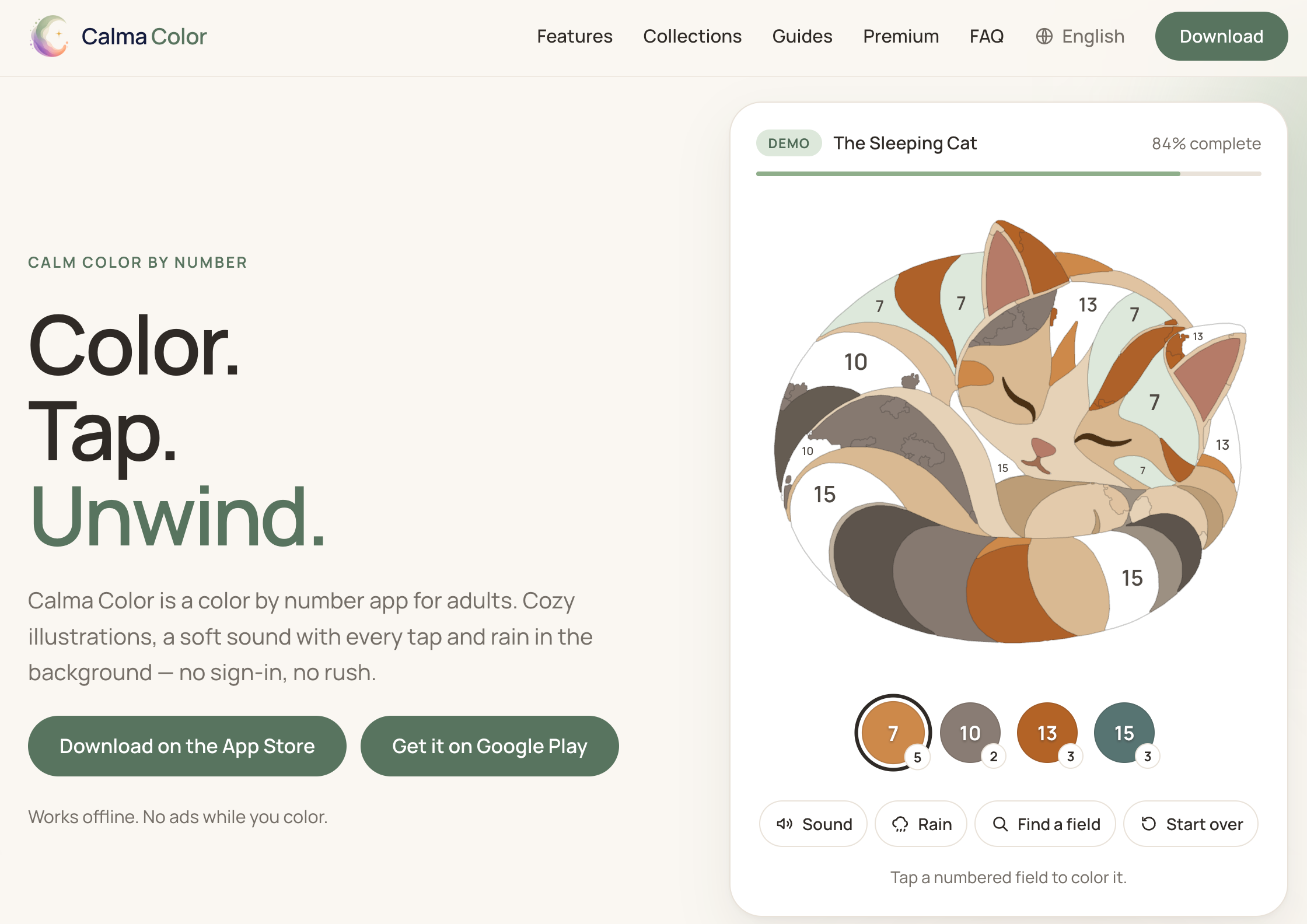
Calma Color is a digital coloring app for adults: users tap numbered color blocks to complete soothing illustrations, enhanced by ambient sounds (rain, forest, piano) and gentle haptic feedback.
No sign-up required; fully offline-capable; zero ads during coloring. Subscription unlocks full image libraries, advanced audio, backgrounds, and Journeys.
Rather than chasing high-frequency usage or productivity gains, it delivers a low-pressure, 2–5 minute mental reset. Free access coexists with a one-time lifetime purchase—lowering the barrier to paid conversion.
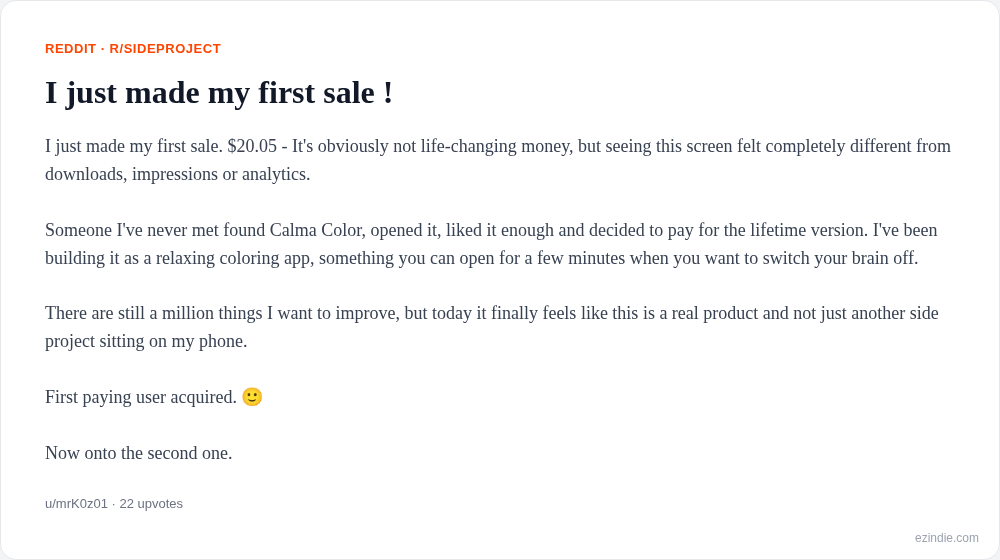
Its first $20.05 sale proves there’s real willingness to pay for low-stimulus, no-account, ad-free micro-tools. For indie makers, the key signal isn’t the dollar amount—it’s that someone paid for clear emotional value. Still, with only one transaction so far, retention, repeat purchases, and conversion rate remain unproven.
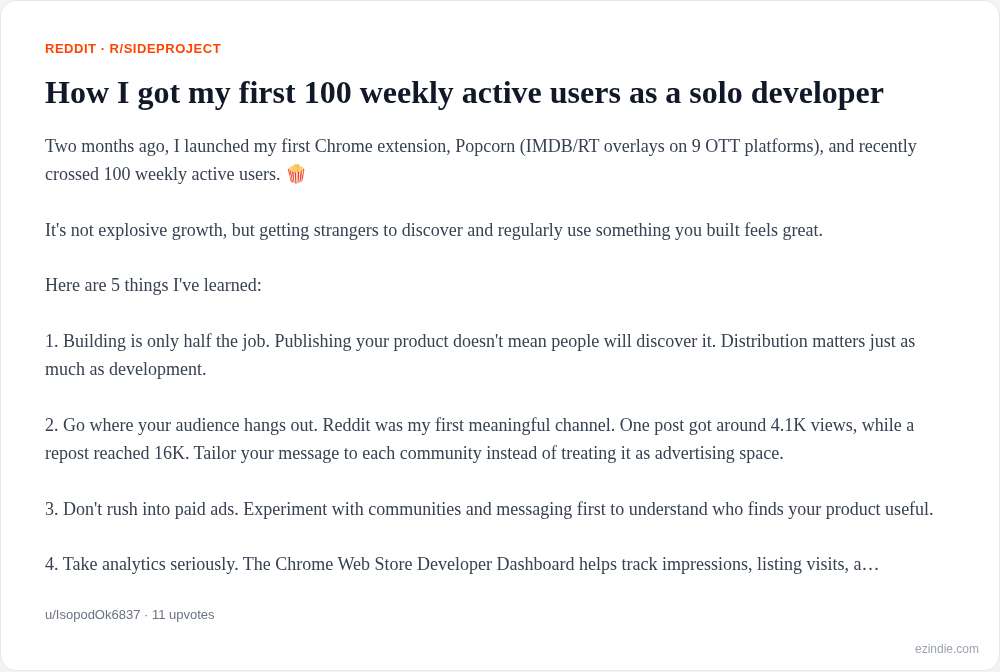
2、Popcorn browser extension hits 100 weekly active users: 5 cold-start lessons
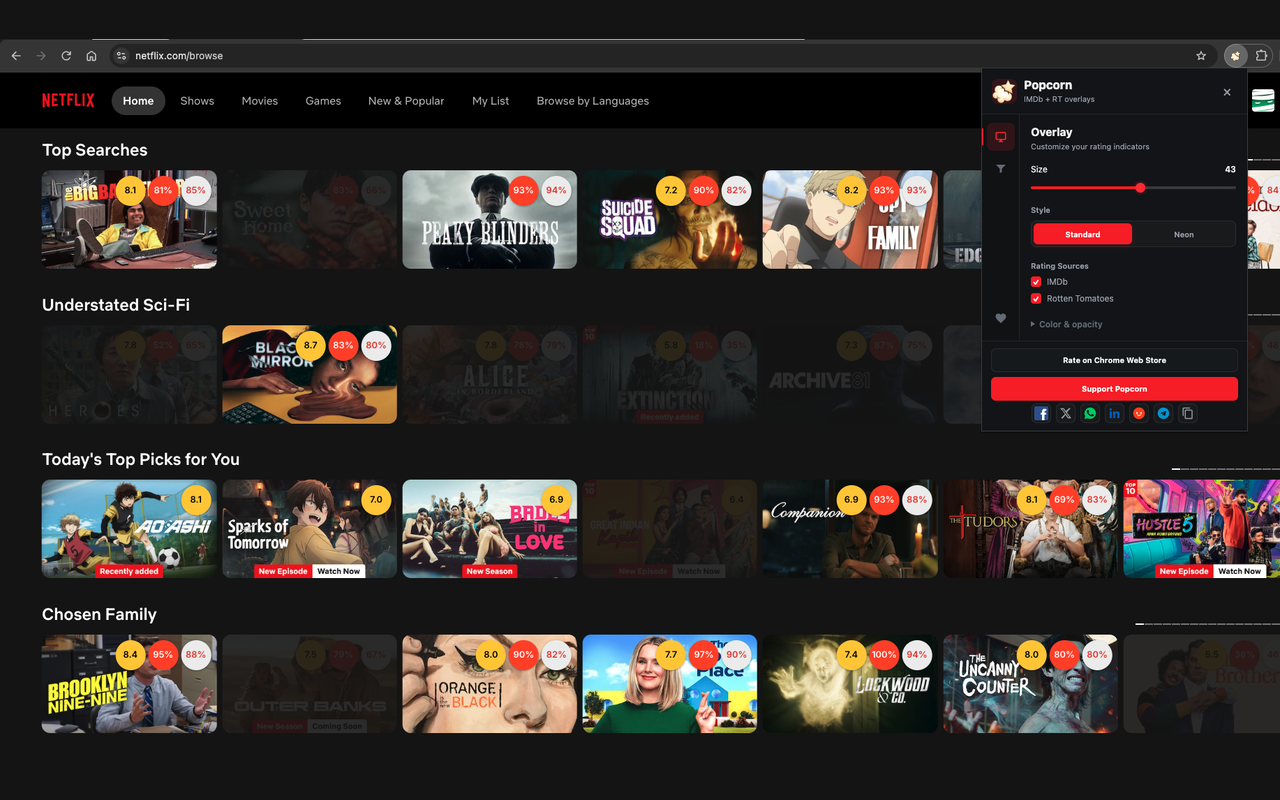
Product: Popcorn is a free Chrome extension that overlays IMDb and Rotten Tomatoes scores directly onto movie posters across 9 streaming platforms—including Netflix, Prime Video, and Disney+ Hotstar—and supports custom icons and filtering. Users judge watchworthiness without leaving the platform.
Growth: Hold off on paid ads. Instead, test messaging, communities, and demo videos to identify who truly needs the product. One Reddit post drove ~4,100 views and 16,000 shares—showing how repackaging the same tool for different contexts can dramatically boost virality.
3、The agent economy’s three infrastructure layers: sell agents, feed agents, host agents
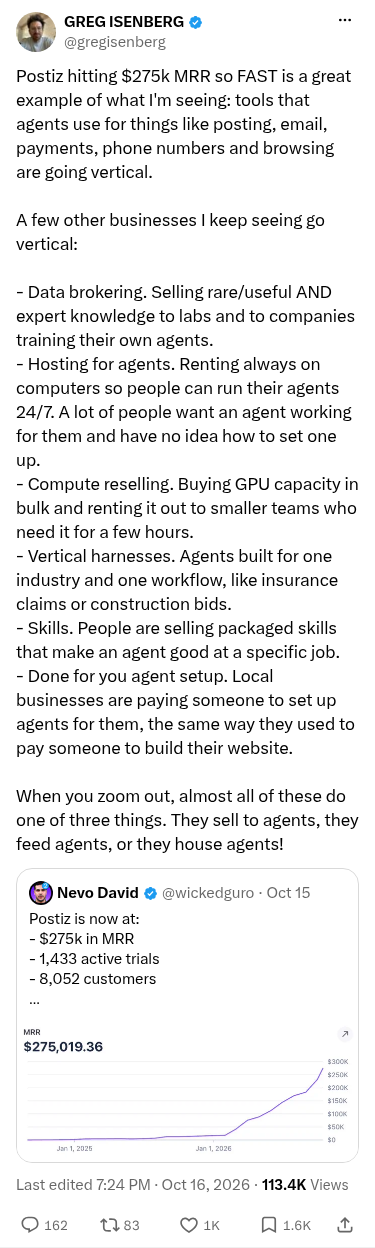
@gregisenberg · 2026/10/16
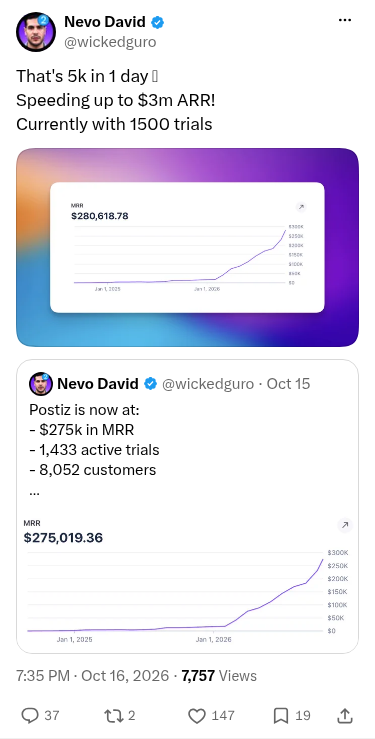
Postiz is an AI Agent-native social media operations tool. It lets ChatGPT, Claude, Codex, OpenClaw, and others create, review, schedule, and publish content via CLI, MCP, API, or integrations like n8n and Make.com—across 30+ platforms. With $275K MRR, it confirms growing demand for tools that let agents directly invoke professional-grade capabilities.
Core insight: AI startup opportunities are shifting from general-purpose models to vertical services. Instead of building yet another generic agent, focus on providing the tools, data, compute, runtime environments, or white-glove setup services that power agent-based business workflows.
Promising directions include:
- Foundational agent tools: posting, email, payments, calls, browser automation.
- Specialized data & knowledge brokerage.
- Agent hosting & compute resale.
- Industry-specific agents and skill packs.
- White-label agent setup services.
In short: Agent-related commercial opportunities fall into three buckets—tools sold to agents, data fed into agents, and environments hosted for agents.
View original post (@gregisenberg · 2026/10/16)
4、Two apps, $1,400 MRR in Month 1: An indie dev’s first revenue milestone
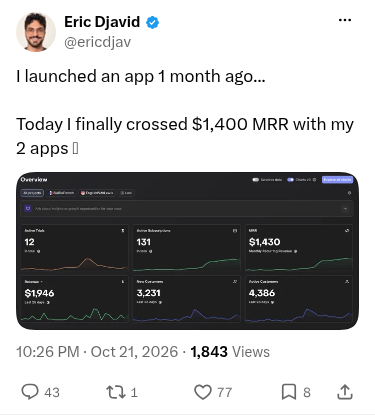
@ericdjav · 2026/10/21
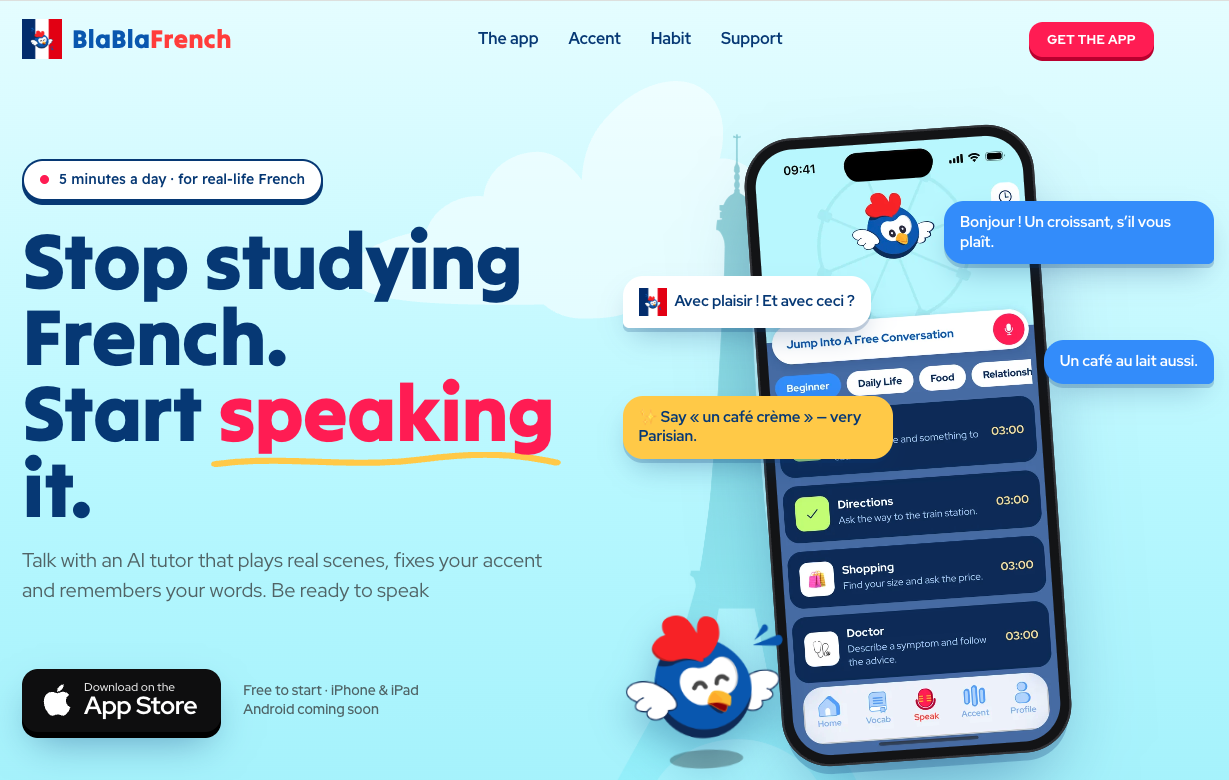
Product: BlablaFrench is an AI-powered French speaking practice app. It uses real-life dialogues (ordering food, asking directions, visiting doctors), real-time correction, pronunciation scoring, bite-sized lessons, vocabulary saving, and spaced repetition—designed for ~5 minutes of daily spoken practice.
Strategy: It avoids bloated courseware and instead focuses relentlessly on the core need: actually speaking. AI cuts coaching costs, while micro-tasks, streaks, and reviews boost retention.
Revenue signal: $1,400 MRR across two apps just one month after launch confirms there’s still room to monetize vertical language learning, subscriptions, and low-cost AI companionship.
View original post (@ericdjav · 2026/10/21)
5、Indie dev lands $5,000 in 1 day trial revenue, targets $3M ARR
@wickedguro · 2026/10/16
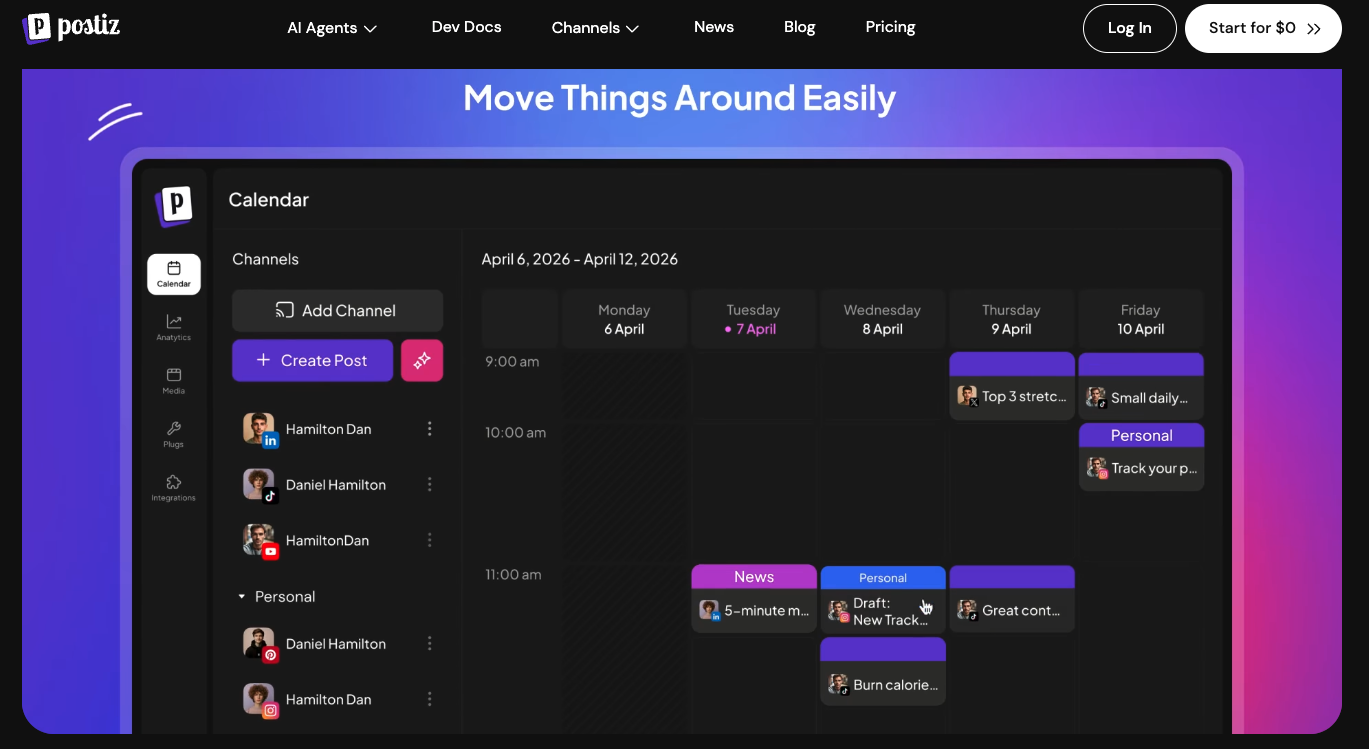
Product: Postiz is an AI-driven social media scheduling and auto-publishing platform. It enables ChatGPT, Claude, Claude Code, Grok, and other agents to plan, generate, and publish content across 30+ platforms—including X, Facebook, Instagram, LinkedIn, and YouTube—via MCP, CLI, or API. Users manage everything in a unified visual calendar, with team collaboration, auto-engagement, and n8n/Make/Zapier integrations.
Growth logic: This showcases a fast B2B SaaS path—7-day free trials lower friction, while AI agents + automation + cross-platform publishing solve high-frequency pain points: content creation, multi-channel distribution, and approval/scheduling.
Signal: $5,000 in one-day trial revenue, 1,500 active trials, and a $3M ARR target. Though the ARR goal remains distant, the combo of rapid revenue growth + high trial volume warrants continued validation.
Key takeaway: AI products win not just by generating text—but by plugging agents into real workflows and enabling sustained operational execution. Next, watch trial-to-paid conversion, retention, posts-per-user, revenue contribution per use case, and where users most consistently pay.
View original post (@wickedguro · 2026/10/16)
6、PostFast social scheduler sees trial surge—debunking ‘software is dead’
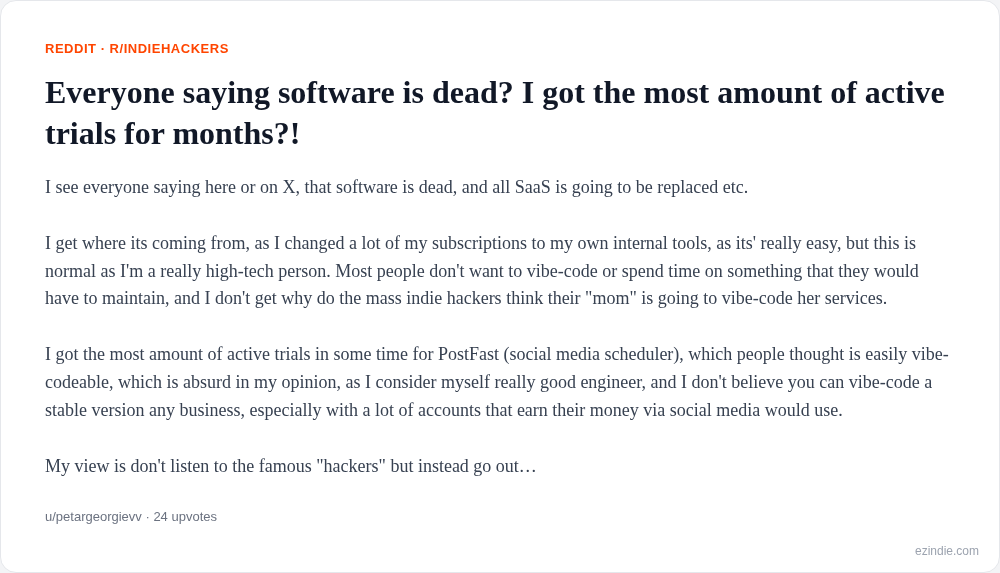
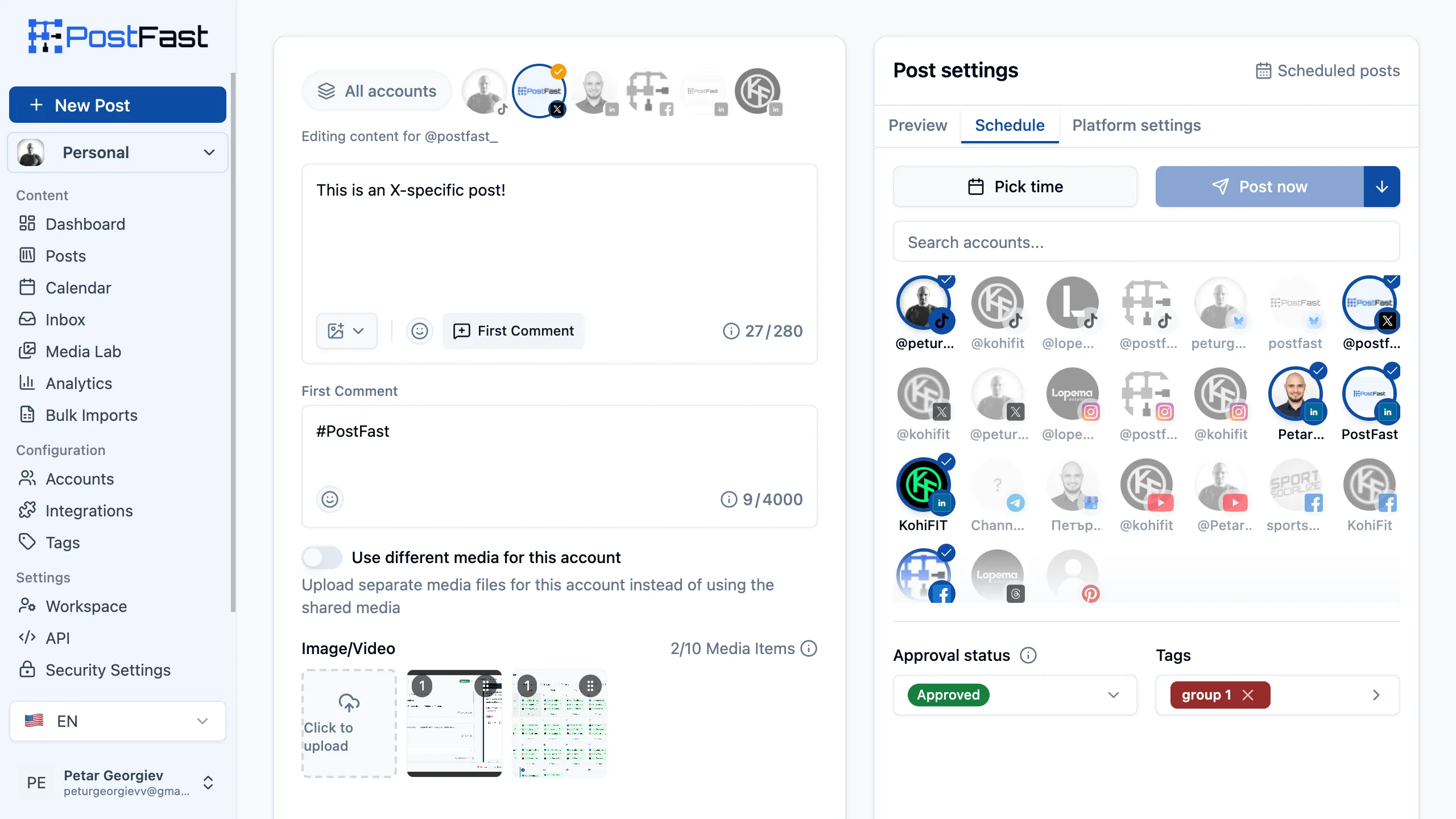
Product: PostFast is a social media scheduling tool for managing multiple accounts and scheduled posts. The creator reports its active trial count recently hit a multi-month high.
Argument: The author pushes back against claims that ‘software is dead’ due to AI and vibe coding. End users won’t build or maintain mission-critical tools themselves—especially those dependent on third-party APIs, requiring uptime, stability, and ongoing maintenance (e.g., social scheduling, email delivery).
Insight: Commodity software with no moat may get absorbed into internal AI tools. Valuable SaaS must solve complex integration, reliability, delivery, and long-term maintenance. The author also cites SendHeron—a custom-built email tool refined over months.
Takeaway: To assess whether AI will disrupt software, look beyond ‘can we generate something similar?’ Ask instead: Do real users adopt it? Do they keep using it? Does it have hard-to-replicate operational or integration barriers?
7、Indie dev hits $100 MRR—and quits the 9-to-5
@Rasmic · 2026/10/12
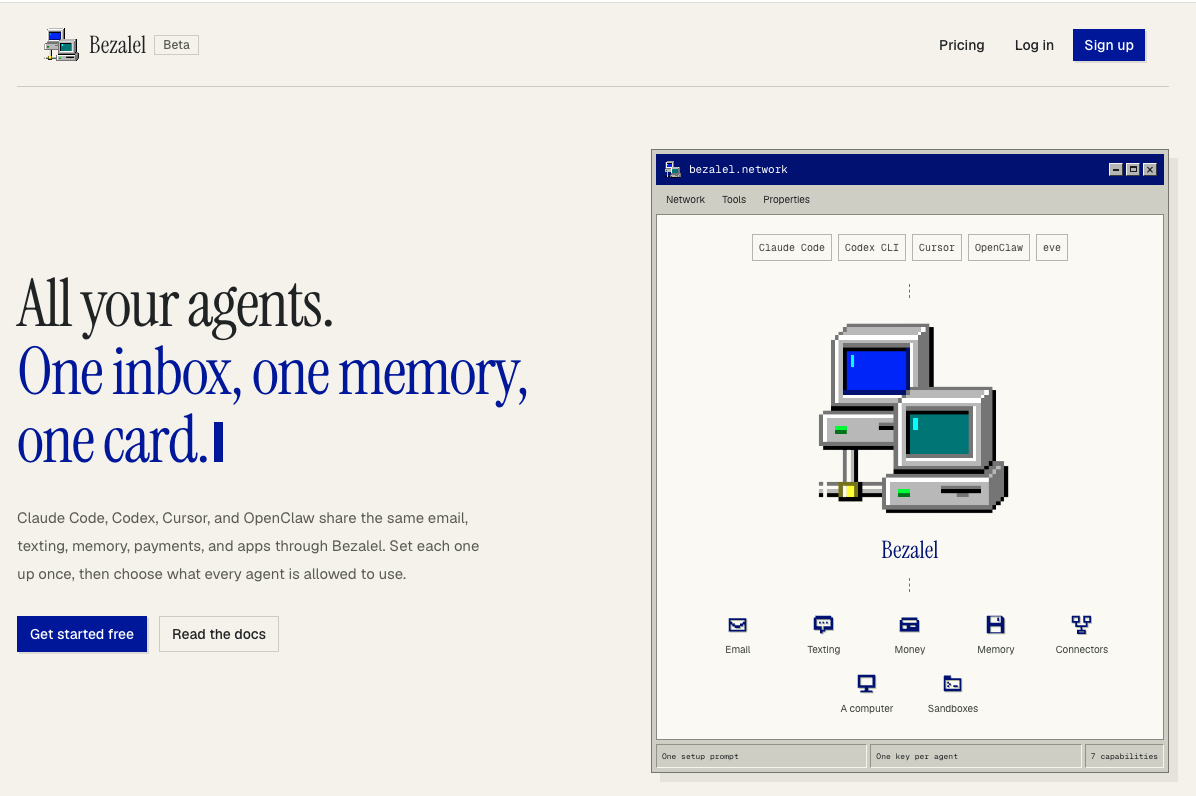
Product: Bezalel is a unified account and capability platform for AI Agents. It connects Claude Code, Codex, Cursor, OpenClaw, and others via MCP, sharing email, SMS, payments, long-term memory, cloud computers, app connectors, and sandbox environments. Configure once, and new agents inherit these capabilities—with granular, per-agent permissions for email, payments, and messages.
Logic: It solves the ‘agent silo’ problem—where agents chat well but can’t reliably act. Now agents can send/receive email, book appointments, shop online, interact with web apps, and even continue tasks after the user steps away. Unified identity, memory, and permissions reduce migration cost when swapping or adding agents.
Value: $100 MRR may seem modest, but it validates willingness to pay for ‘cross-agent identity, memory, and action coordination’. Its potential goes beyond connecting one more AI tool—it could become the central hub for managing all digital agents, permissions, and automations.

View original post (@Rasmic · 2026/10/12)
8、Solo biotech startup acquired by Anthropic: Pipeline-in-a-Person
@Prof_Oak_ · 2026/10/27
Product: Anthropic acquired Mithril Medicine and integrated its ‘Pipeline-in-a-Person’ model. Founder Cody Tranbarger joins Anthropic, and Mithril’s R&D programs continue.
Logic: Mithril operated with just one founder, heavy Claude usage, and part-time consultants—proving AI doesn’t just accelerate research timelines, but empowers scientists to run multiple parallel projects, shifting time spent from email coordination to critical scientific judgment.
Commercial impact: This isn’t just an AI research tool—it’s a replicable drug discovery operating model. If systematized and scaled, it could improve parallelization, decision quality, drug hit rates, and output—while lowering the barrier to entry for small teams in biotech.

View original post (@Prof_Oak_ · 2026/10/27)
9、Claude-SEO: A full-featured SEO skill library built for Claude
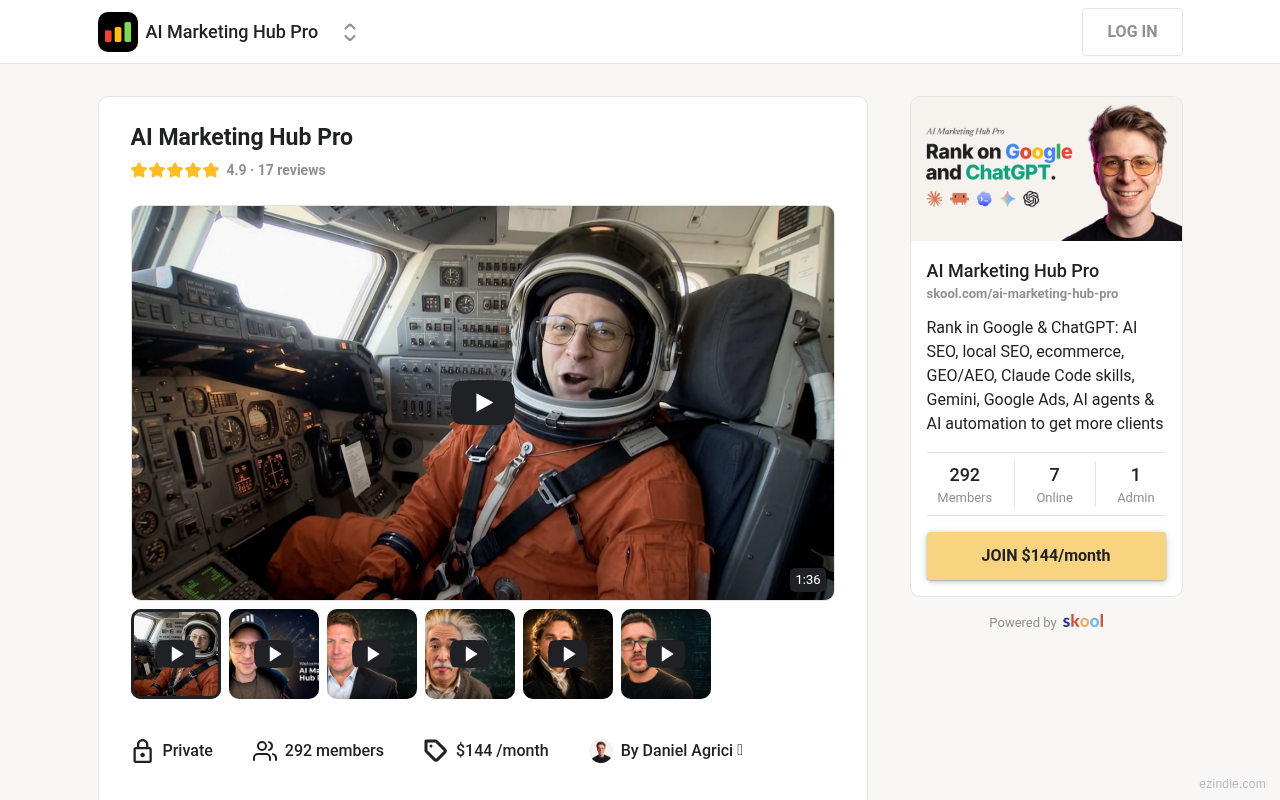
AgriciDaniel/claude-seo
This repo embodies the classic 'AI-native toolchain' mindset—not building new apps, but deeply packaging professional SEO workflows into atomic, LLM-callable, composable, and evolvable capabilities. It aligns with the open-source community’s urgent demand for 'Agent-ready infrastructure'.
GitHub (AgriciDaniel/claude-seo)
10、taste-skill: Giving coding agents artistic intuition and visual taste
Leonxlnx/taste-skill
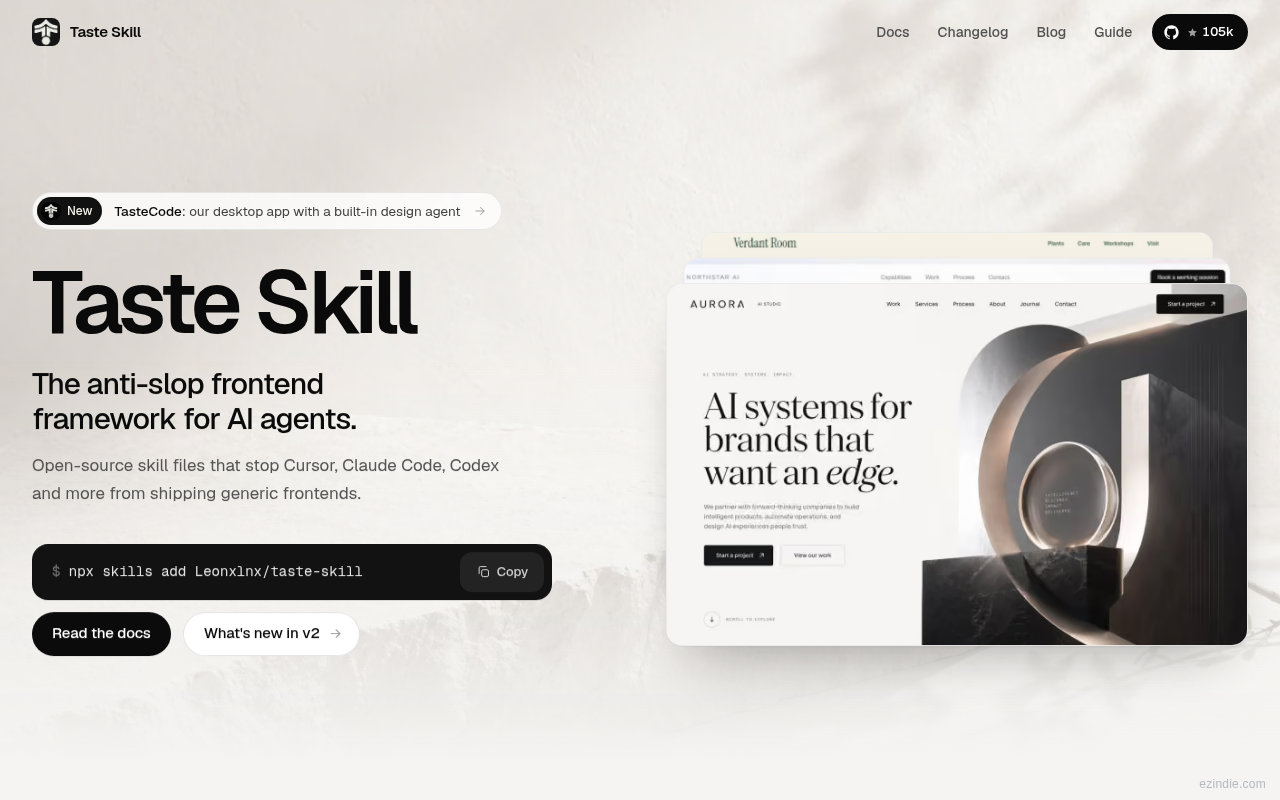
It tackles the current AI Agent weakness in UI/UX generation—‘functional but soulless’. By packaging designer thinking (composition, color harmony, reference anchoring) and engineering validation (real rendering checks) into a plug-and-play skill, it doesn’t make AI better at writing code—it makes AI better at judging what’s worth writing.